
“But Slavery Existed Everywhere.” So What Made Racial Slavery Different?
Unpacking what made racial slavery different.
Publication date — to be added
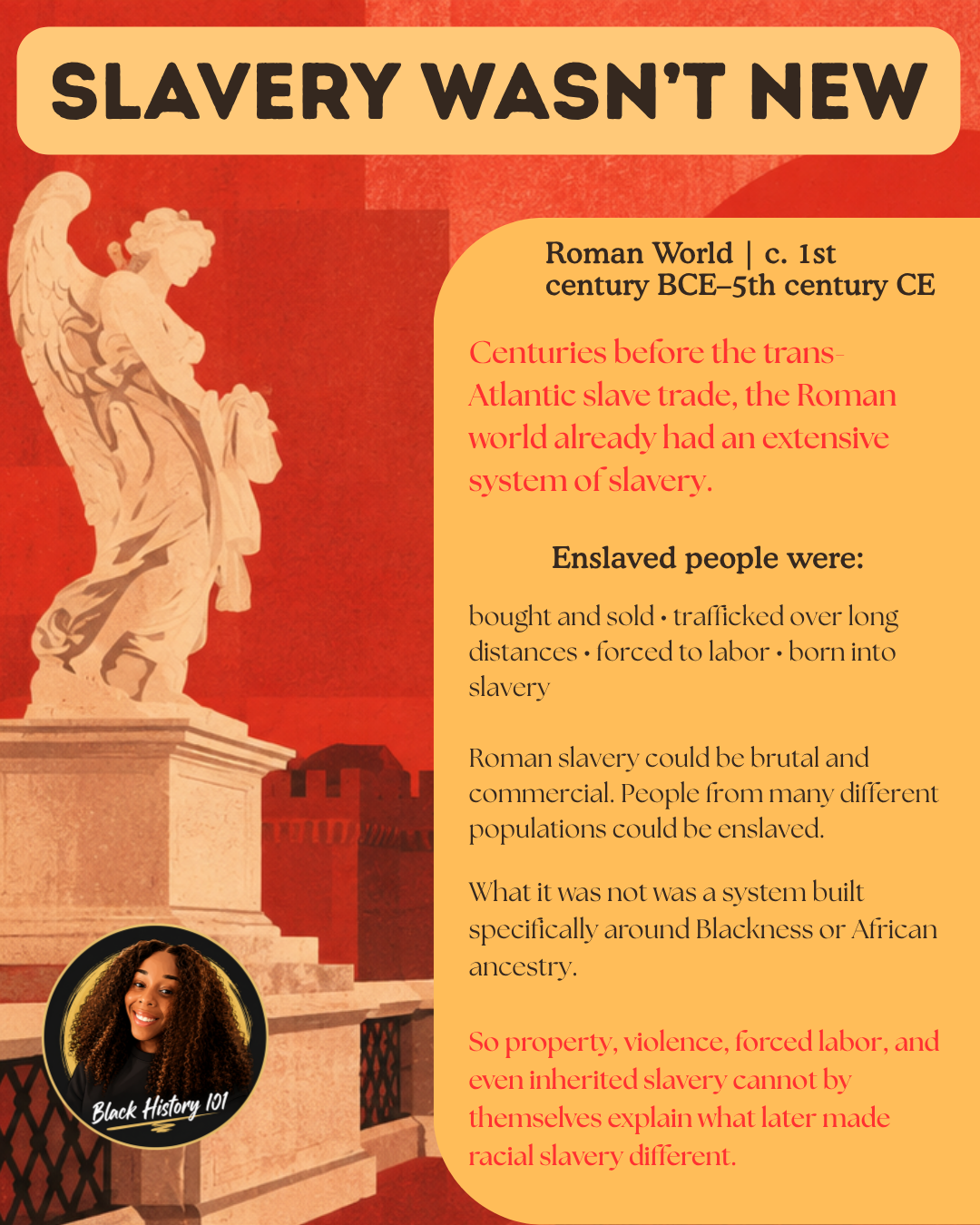
Introduction
Yes, slavery existed long before the trans-Atlantic slave trade. The Romans practiced slavery. Medieval Europe had systems of unfree labor.
But property, violence, forced labor, and even inherited slavery cannot by themselves explain what later made racial slavery different.
This visual essay follows the evidence slide by slide: Roman slavery, Black presence in Europe before the trans-Atlantic trade, the shift from chattel slavery to serfdom, Christianity and the question of who could be enslaved, the focus on the “outsider,” and the moment Blackness and African ancestry became law in the colonial Americas.
Digital PDF
Keep this essay.
Explore downloadable Black History 101 Visual Essay learning guides for deeper learning, classroom use, and independent study.
Sources & Further Reading
- Anievas, Alexander, and Kerem Nişancıoğlu. “The Atlantic Sources of European Capitalism: Territorial Sovereignty and the Modern Self.” In How the West Came to Rule: The Geopolitical Origins of Capitalism. London: Pluto Press, 2015.
- Blackburn, Robin. “The Old World Background to European Colonial Slavery.” The William and Mary Quarterly 54, no. 1 (1997): 65–102.
- Lowcountry Digital History Initiative. “European Christianity and Slavery.” African Passages, Lowcountry Adaptations.
- Lowcountry Digital History Initiative. “Slavery before the Trans-Atlantic Trade.” African Passages, Lowcountry Adaptations.
- Paolella, Christopher. “Early Medieval Slave Trading.” In Human Trafficking in Medieval Europe: Slavery, Sexual Exploitation, and Prostitution, 41–82. Amsterdam: Amsterdam University Press, 2020.
- Thompson, Alvin O. “Race and Colour Prejudices and the Origin of the Trans-Atlantic Slave Trade.” Caribbean Studies 16, nos. 3–4 (1976–77): 29–59.
- Wood, William J. “The Illegal Beginning of American Negro Slavery.” American Bar Association Journal 56, no. 1 (1970): 45–49.
- Olivette Otele, “The History of Europe’s Blacks Has Been Struck by a Partial Amnesia,” UNESCO Courier (2021).
Related Essays
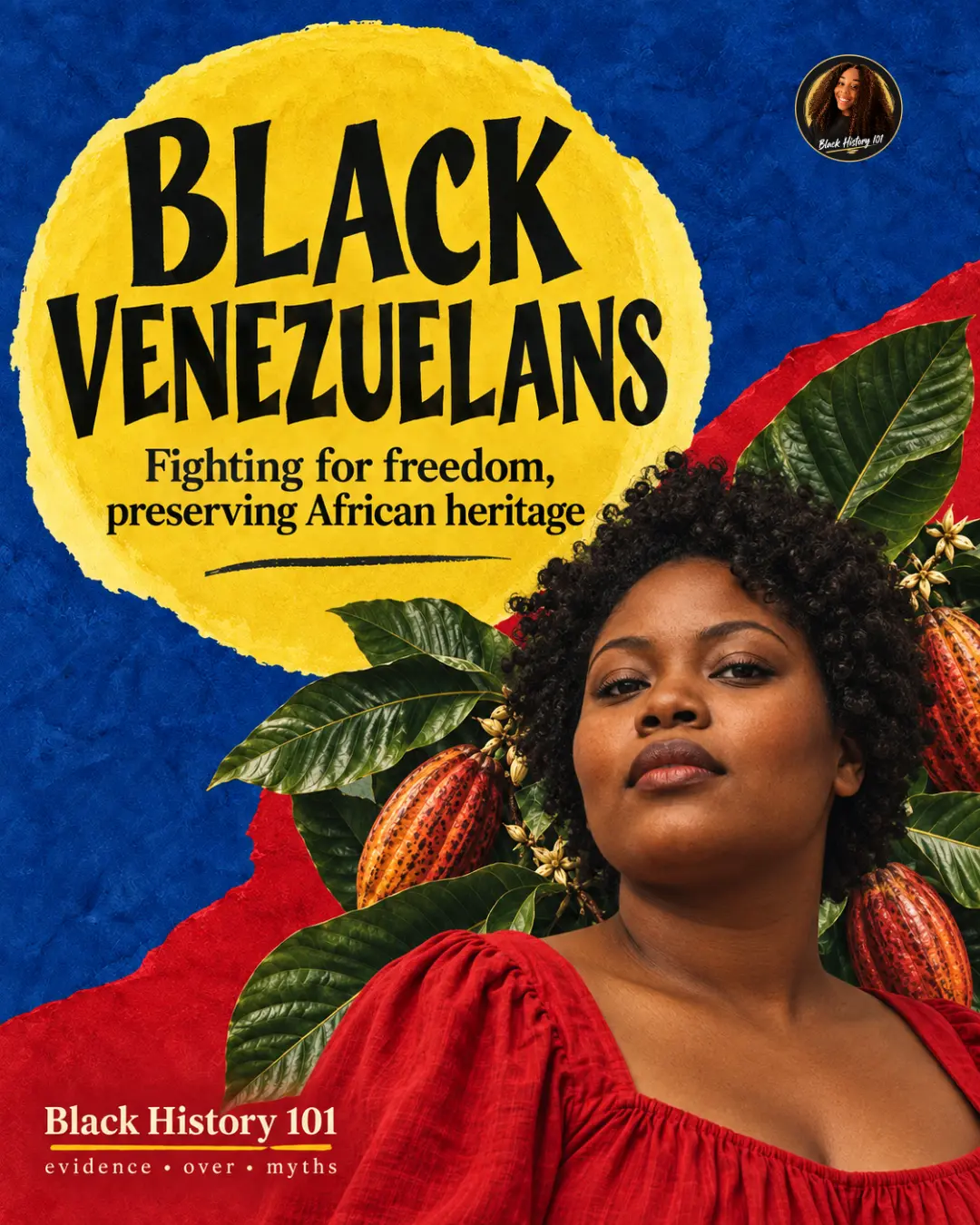
Black Venezuelans
Fighting for freedom, preserving African heritage
From the early 1500s, enslaved Africans in Venezuela worked in mining and agriculture, escaped to build their own communities, rose up at Coro in 1795, and sustained African traditions that their descendants continue to defend.
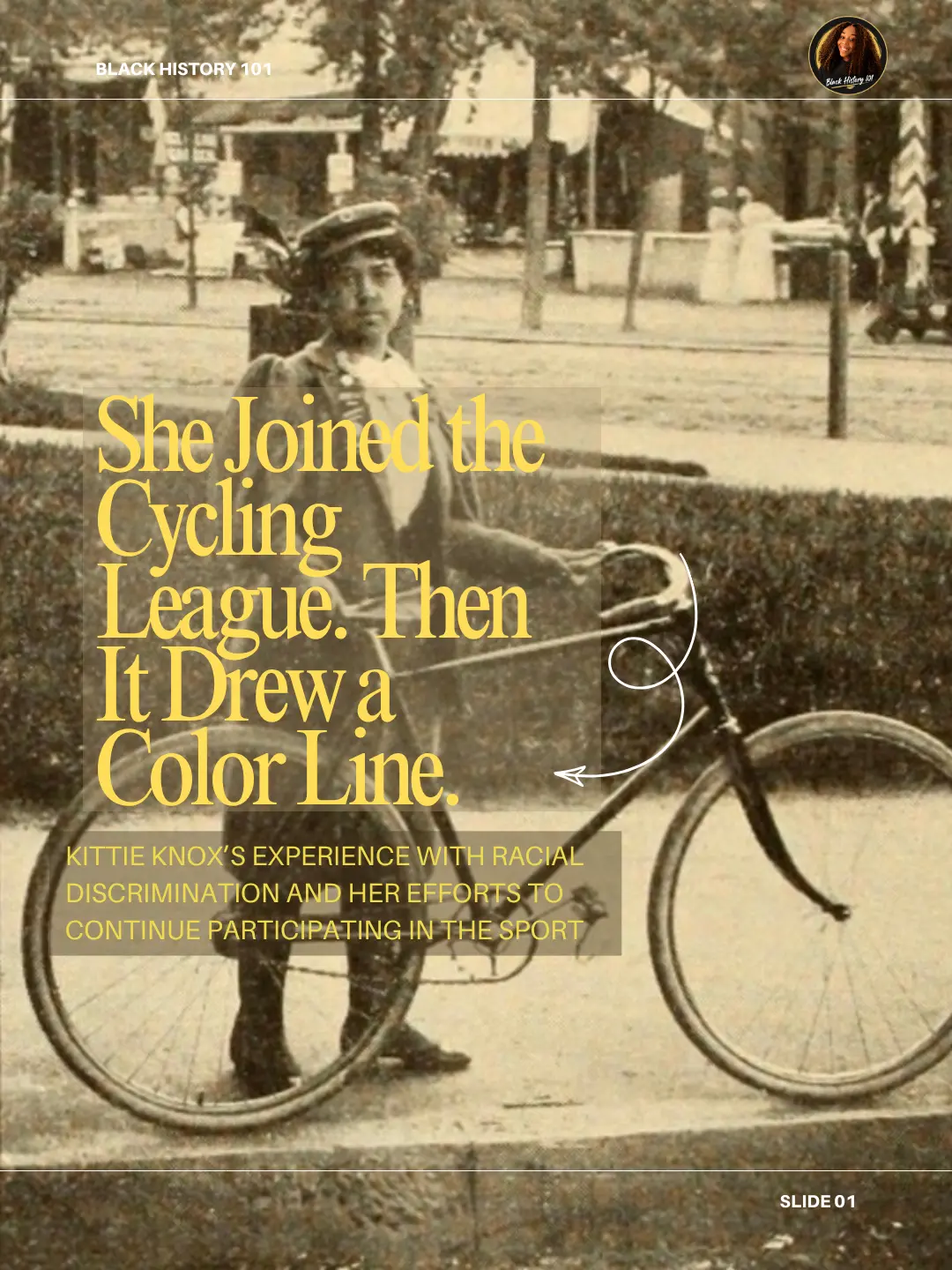
She Joined the Cycling League. Then It Drew a Color Line.
Kittie Knox's experience with racial discrimination and her efforts to continue participating in the sport.
Kittie Knox joined the League of American Wheelmen in 1893. When the league restricted new membership to white people the next year, her eligibility was questioned, and she kept presenting her credentials and riding.
Join The 101
The story doesn't end here.
Join The 101 and get the monthly Black History 101 letter—a story worth knowing, the context behind it, and what to read or watch next.
Free to join. Receive the monthly Black History 101 letter plus occasional updates about new resources, courses, and programs. Unsubscribe anytime.
Keep Learning
Classroom-ready Black history resources, courses and teaching materials.
Explore Educator ResourcesFor FamiliesResources for parents and caregivers who want to explore Black history at home.
Learn TogetherFor Curious MindsVisual essays, courses and resources for independent learners who want to go deeper.
Start Exploring