
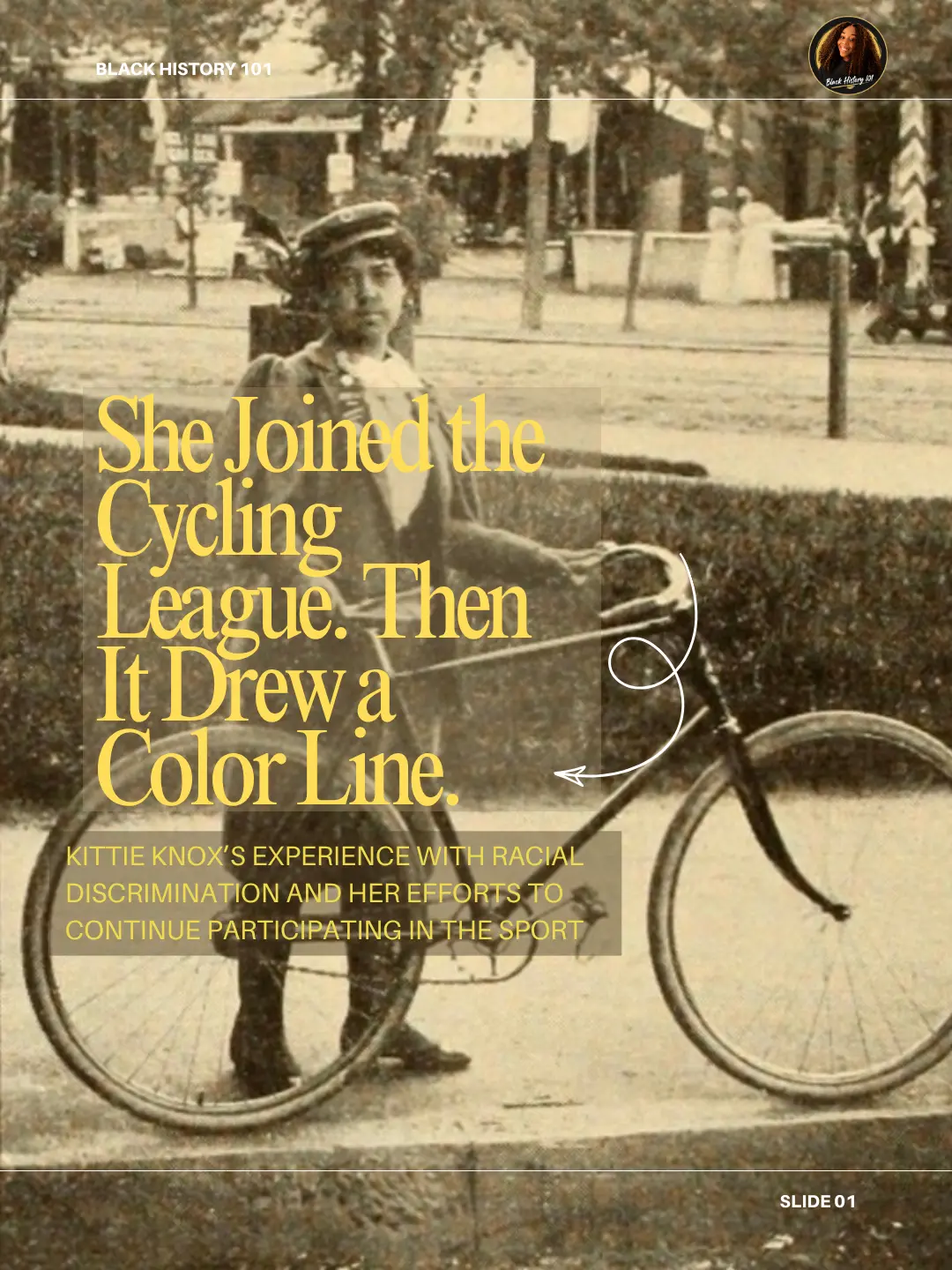
She Joined the Cycling League. Then It Drew a Color Line.
Kittie Knox's experience with racial discrimination and her efforts to continue participating in the sport.
Publication date — to be added
Introduction
Kittie Knox was born in Cambridgeport, Massachusetts, in 1874 and grew up in Boston after her father's death. Working as a seamstress provided her with the money to purchase a bicycle. Her interest in cycling led her to participate in rides and events through which she became known within the local cycling community.
Knox's participation in cycling extended to demanding long-distance rides. For instance, she completed multiple 100-mile rides, establishing herself as an accomplished cyclist. In 1893, she joined the League of American Wheelmen, a national cycling organization. Although its membership was predominantly male, Knox secured membership and continued developing her involvement in the sport.
In February 1894, the League of American Wheelmen changed its constitution to limit new membership to white people. Knox had joined in April 1893, before this restriction existed. Despite her existing membership, the change led others to question her eligibility, creating an obstacle to her participation based on her race.
The expectations Knox encountered were not limited to her race but also included how women should dress when cycling. She used her experience as a seamstress to make riding trousers rather than wear the customary long skirts. Her clothing earned first place in a Waltham costume competition in 1895, although journalists frequently focused on her appearance instead of her cycling ability.
At the league's July 1895 meeting in Asbury Park, New Jersey, Knox presented her membership credentials after her eligibility was challenged. Reports indicate that she was denied entry despite being a member. However, members of the Massachusetts delegation supported her participation, and newspaper coverage brought wider attention to the discrimination she experienced.
The league's bulletin addressed the dispute by explaining that Knox's membership preceded the racial restriction. As a result, the new rule could not be used to invalidate her membership. Although the restriction remained for new Black applicants, Knox's efforts challenged her exclusion and brought public attention to the treatment of Black cyclists within the organization.
Digital PDF
Keep this essay.
Explore downloadable Black History 101 Visual Essay learning guides for deeper learning, classroom use, and independent study.
Sources & Further Reading
- Cambridge Black History Project. “Katherine T. ‘Kittie’ Knox.” n.d.
- Historic New England. “Kittie Knox: Nineteenth-Century Cyclist and Barrier Breaker.” September 4, 2025.
- Miller, Grace. “Breaking the Cycle: The Kittie Knox Story.” Smithsonian Libraries and Archives / Unbound, May 26, 2020.
Related Essays
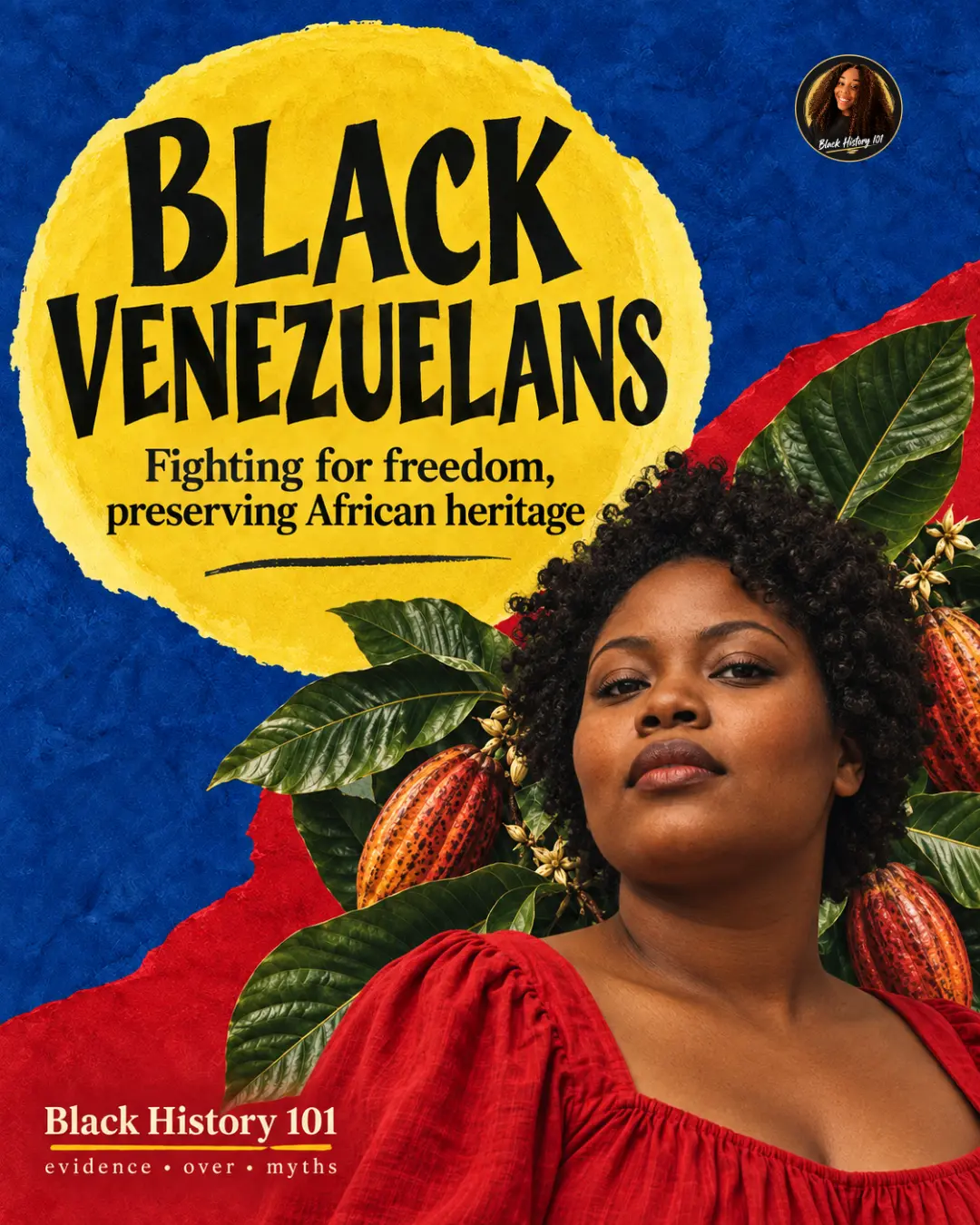
Black Venezuelans
Fighting for freedom, preserving African heritage
From the early 1500s, enslaved Africans in Venezuela worked in mining and agriculture, escaped to build their own communities, rose up at Coro in 1795, and sustained African traditions that their descendants continue to defend.
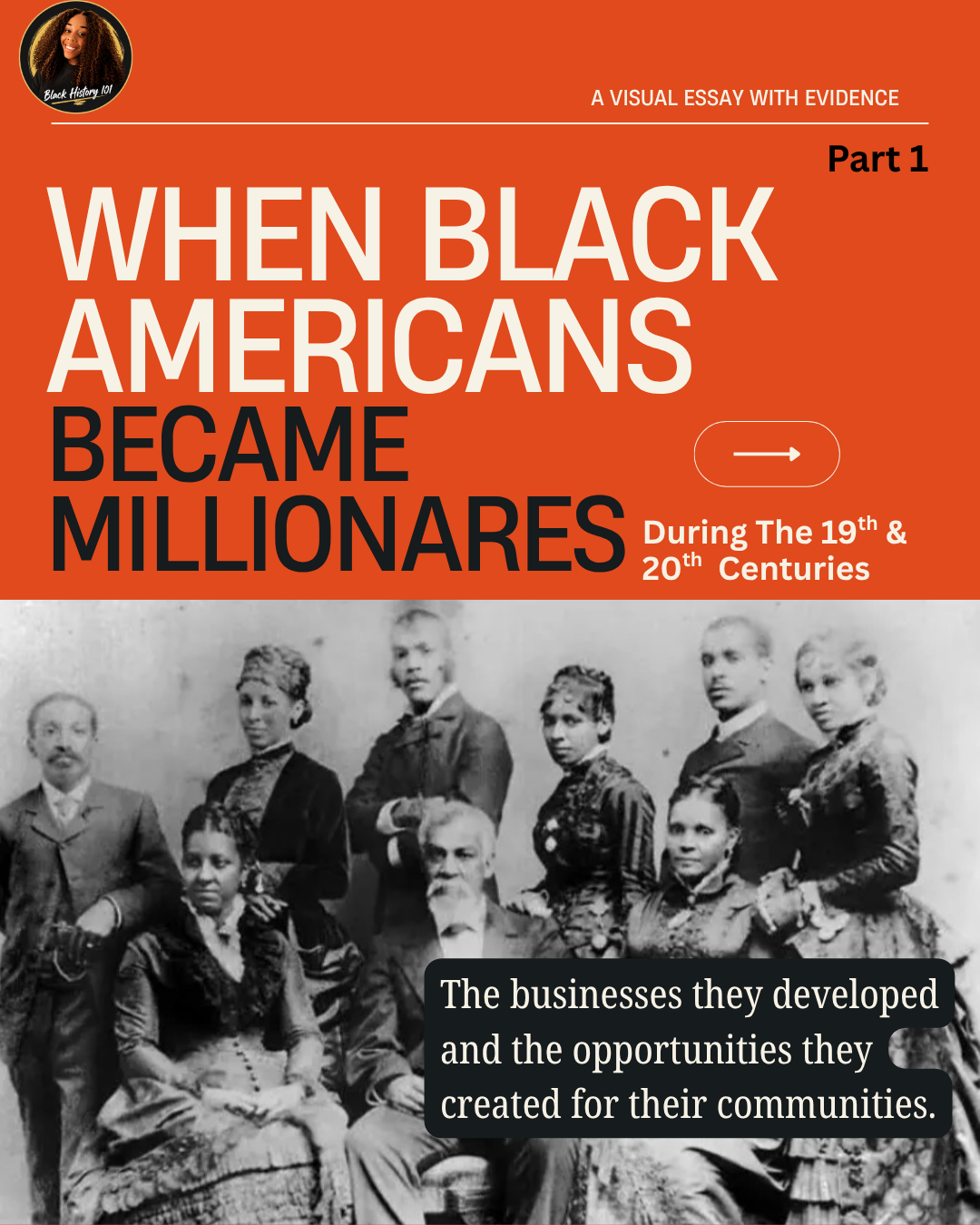
When Black Americans Became Millionaires
During the 19th and 20th centuries: the businesses they developed and the opportunities they created for their communities.
Jeremiah G. Hamilton, Robert Reed Church Sr., Annie Turnbo Malone, and Madam C. J. Walker built fortunes in finance, real estate, and hair care despite discrimination, then used their resources to support education, employment, and community institutions.
Join The 101
The story doesn't end here.
Join The 101 and get the monthly Black History 101 letter—a story worth knowing, the context behind it, and what to read or watch next.
Free to join. Receive the monthly Black History 101 letter plus occasional updates about new resources, courses, and programs. Unsubscribe anytime.
Keep Learning
Classroom-ready Black history resources, courses and teaching materials.
Explore Educator ResourcesFor FamiliesResources for parents and caregivers who want to explore Black history at home.
Learn TogetherFor Curious MindsVisual essays, courses and resources for independent learners who want to go deeper.
Start Exploring