
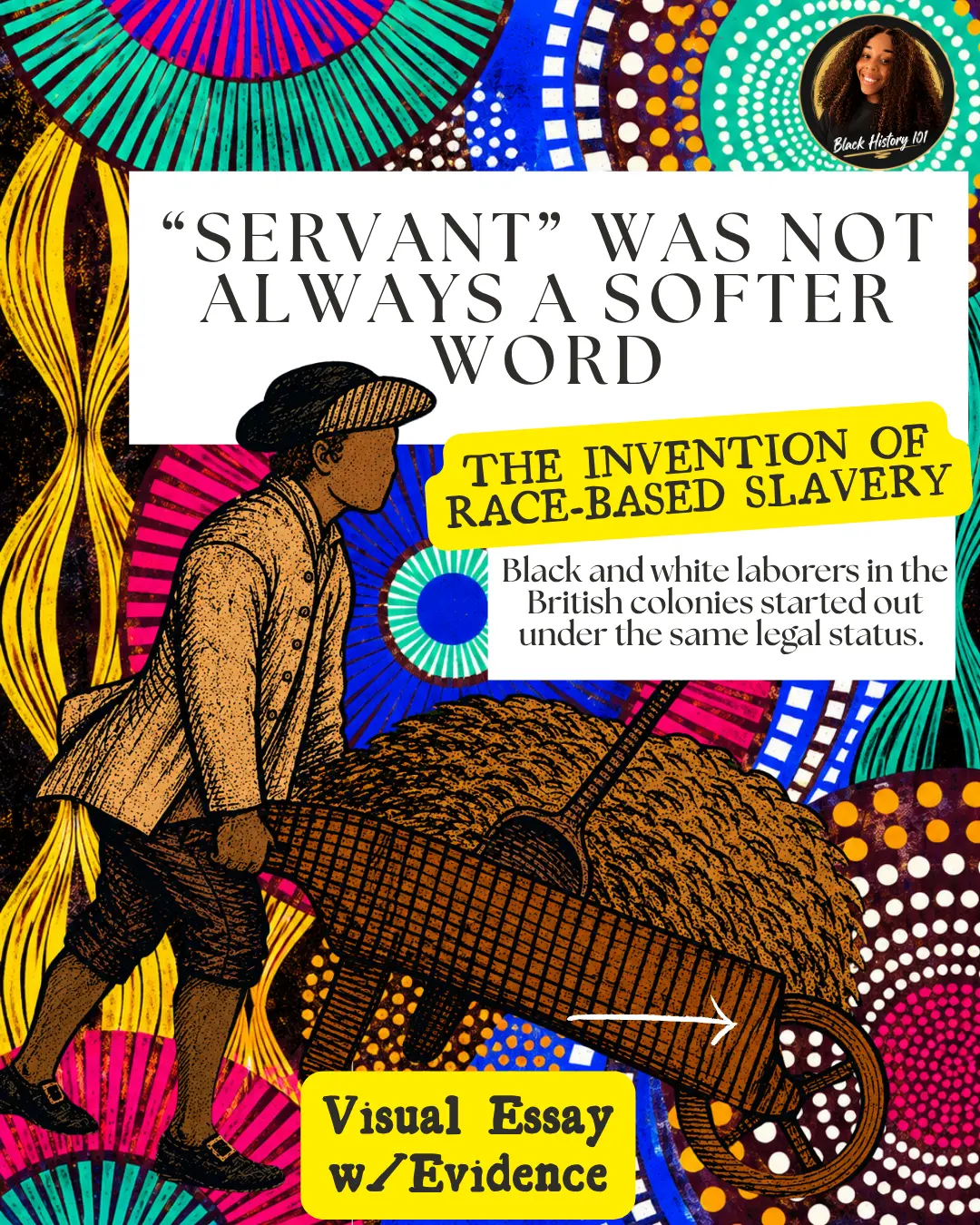
“Servant” Was Not Always a Softer Word
The invention of race-based slavery.
Publication date — to be added
Introduction
Black and white laborers in the British colonies started out under the same legal status.
This visual essay traces, slide by slide, how colonial law, court cases, and economics turned servitude into hereditary, race-based slavery.
Digital PDF
Keep this essay.
Explore downloadable Black History 101 Visual Essay learning guides for deeper learning, classroom use, and independent study.
Sources & Further Reading
- Bouie, Jamelle, and Rebecca Onion. “The Terrible Transformation.” History of American Slavery. Slate Academy, 2015.
- Davis, T. R. “Negro Servitude in the United States: Servitude Distinguished from Slavery.” Journal of Negro History 8, no. 3 (1923): 247–283.
- Galenson, David W. “The Rise and Fall of Indentured Servitude in the Americas: An Economic Analysis.” Journal of Economic History 44, no. 1 (1984): 1–26.
- Nicholson, Bradley J. “Legal Borrowing and the Origins of Slave Law in the British Colonies.” American Journal of Legal History 38 (1994): 38–54.
- “Indentured Servants.” Hampton National Historic Site. National Park Service. Accessed August 30, 2026.
- “Laws Concerning Indentured Servants” (1619), “Irish Servants” (1655), “Contract for Servant without an Indenture” (1665), and “Contract and Recommendation for William Buckland” (1755; 1759). Encyclopedia Virginia. Virginia Humanities.
Related Essays
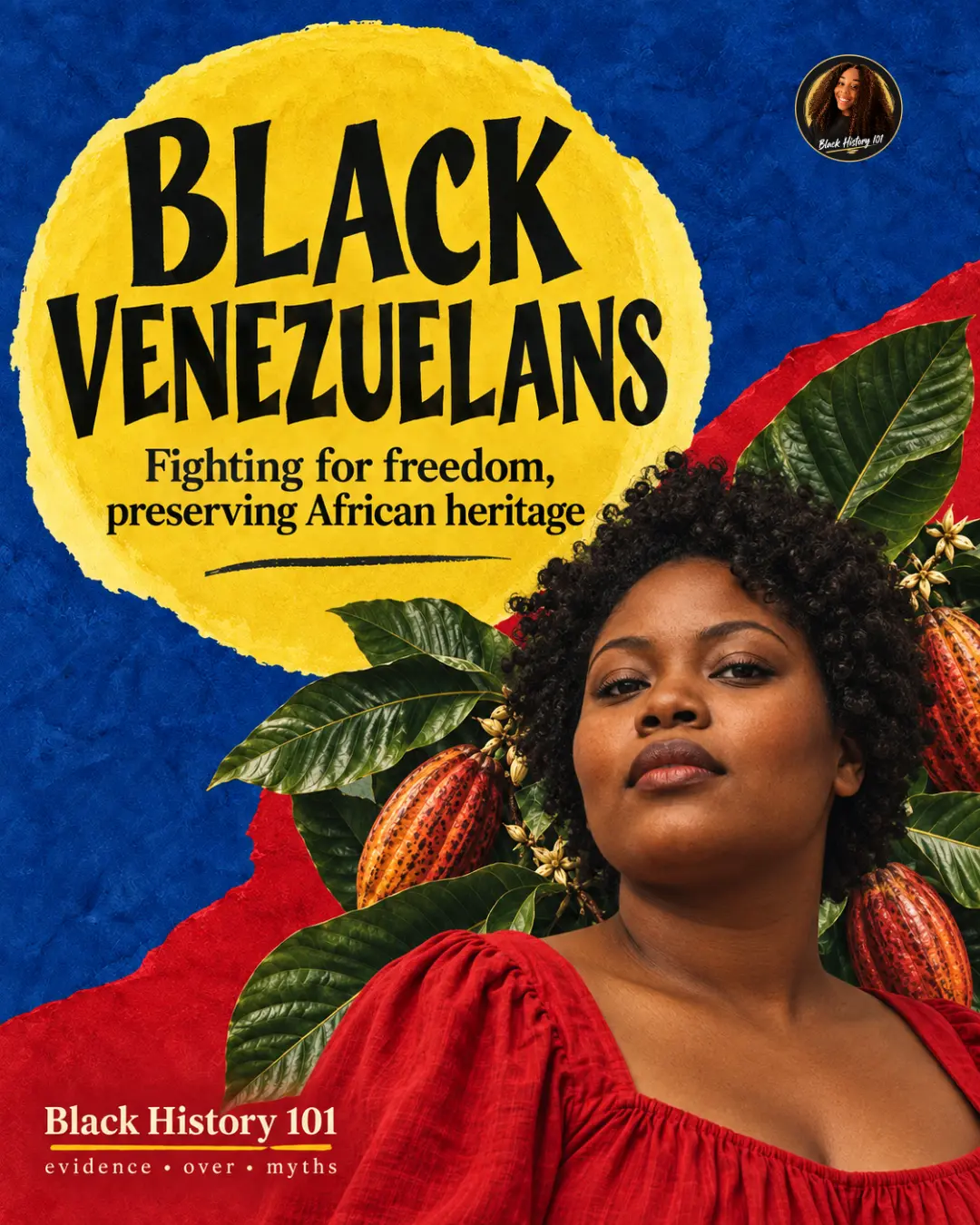
Black Venezuelans
Fighting for freedom, preserving African heritage
From the early 1500s, enslaved Africans in Venezuela worked in mining and agriculture, escaped to build their own communities, rose up at Coro in 1795, and sustained African traditions that their descendants continue to defend.
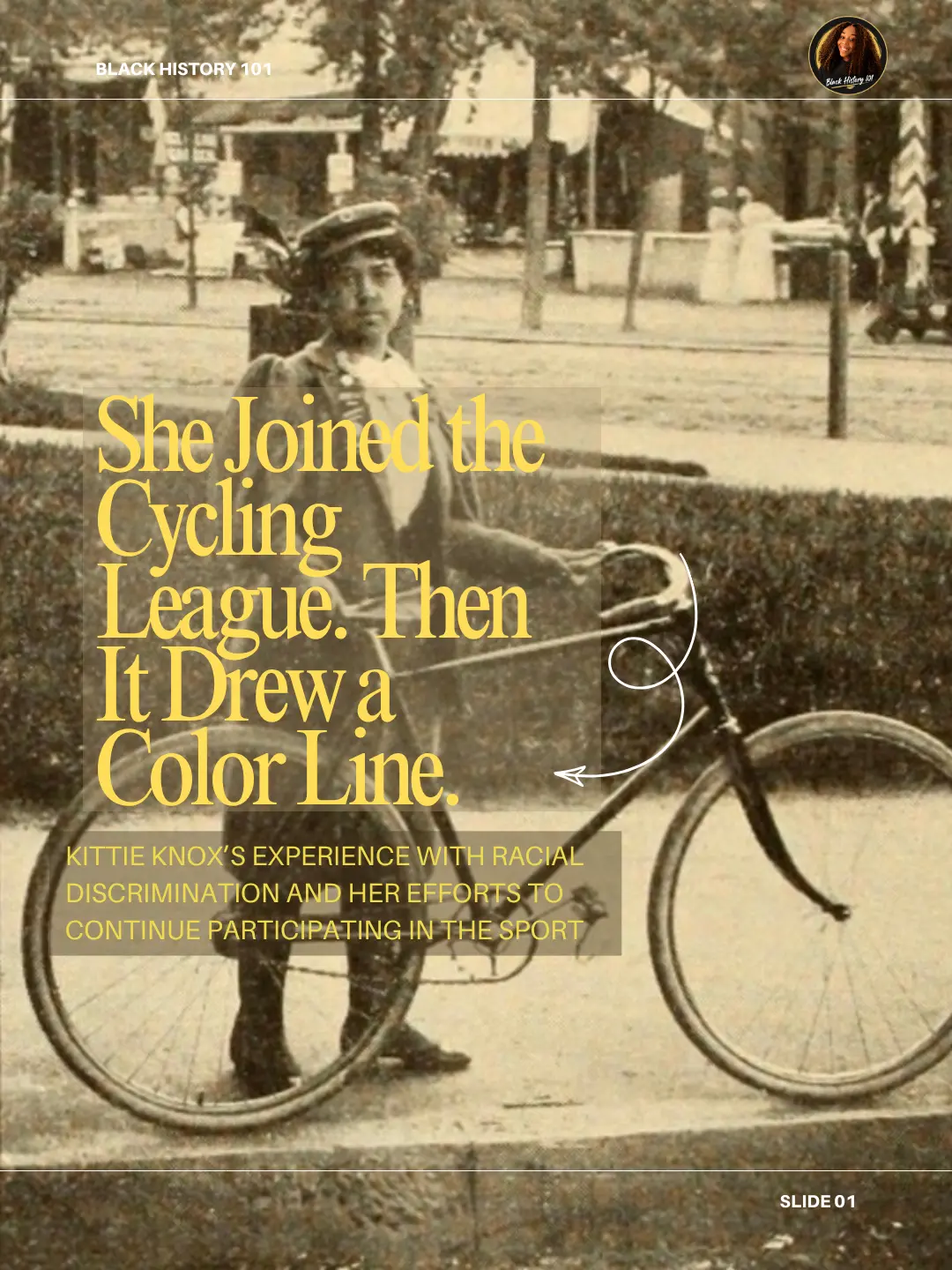
She Joined the Cycling League. Then It Drew a Color Line.
Kittie Knox's experience with racial discrimination and her efforts to continue participating in the sport.
Kittie Knox joined the League of American Wheelmen in 1893. When the league restricted new membership to white people the next year, her eligibility was questioned, and she kept presenting her credentials and riding.
Join The 101
The story doesn't end here.
Join The 101 and get the monthly Black History 101 letter—a story worth knowing, the context behind it, and what to read or watch next.
Free to join. Receive the monthly Black History 101 letter plus occasional updates about new resources, courses, and programs. Unsubscribe anytime.
Keep Learning
Classroom-ready Black history resources, courses and teaching materials.
Explore Educator ResourcesFor FamiliesResources for parents and caregivers who want to explore Black history at home.
Learn TogetherFor Curious MindsVisual essays, courses and resources for independent learners who want to go deeper.
Start Exploring