
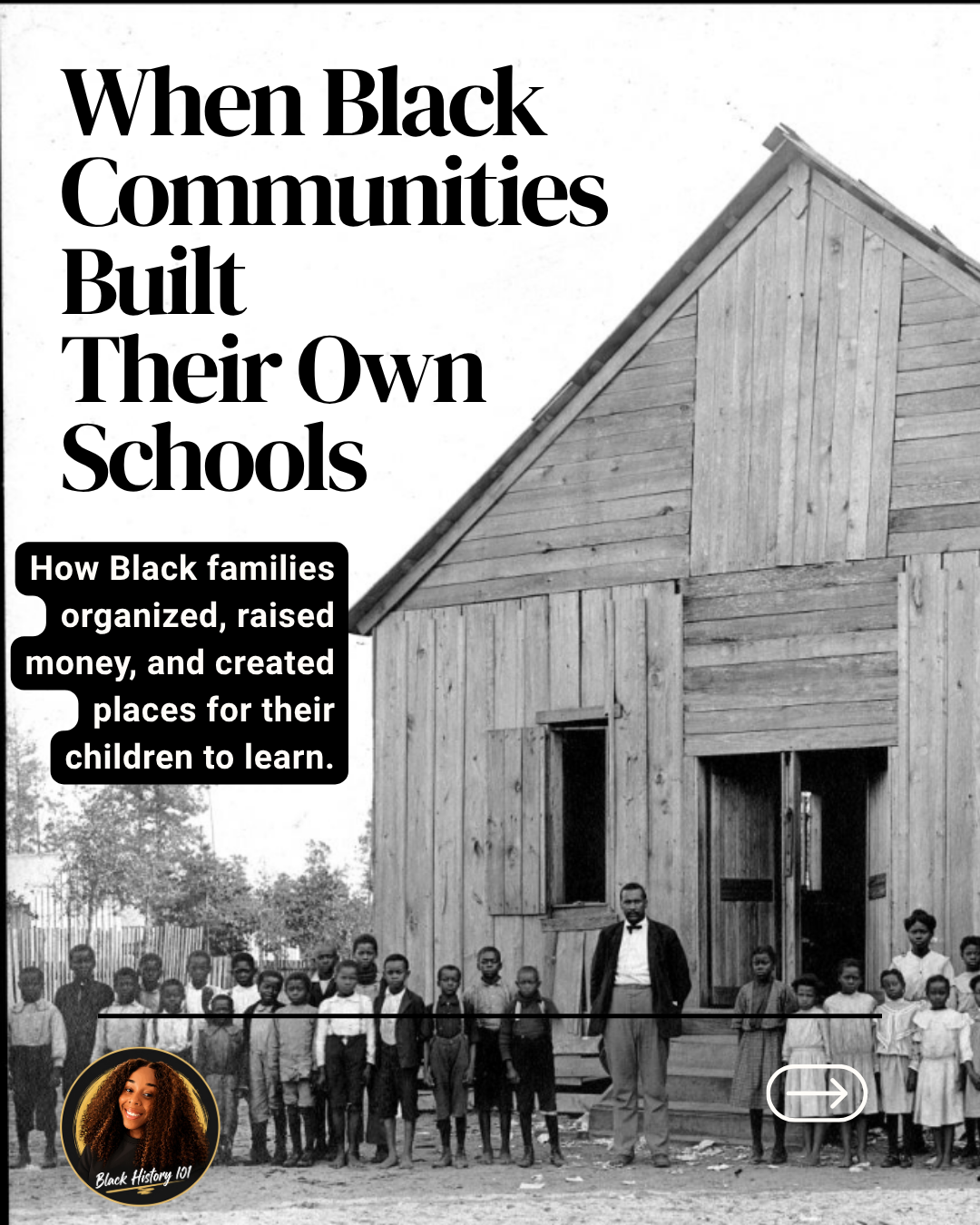
When Black Communities Built Their Own Schools
How Black families organized, raised money, and created places for their children to learn.
Publication date — to be added
Introduction
Black parents demanded schools that protected their children. In 1834 Rochester, New York, 32 Black residents petitioned for a separate school after their children faced racial harassment — pushing for education while refusing to accept the conditions they were forced to endure. A year later in Lockport, New York, Black residents set out to raise $150 through subscriptions to build something that would serve as both school and place of worship.
During the Civil War, Martha Culling, a formerly enslaved woman, opened a school on Roanoke Island, North Carolina, that served 120 students a day; by 1863 six schools there were serving more than 1,200 children and adults. After 1866 in Sharpsburg, Maryland, the Black community used Tolson's Chapel as a classroom for children and adults, with local Black teachers eventually taking over from Freedmen's Bureau appointees and keeping it running as a school until 1899.
In 1913, Booker T. Washington and Julius Rosenwald teamed up to build six schools in rural Alabama. As the program grew, Black communities raised the money to keep building — by the early 1930s, the partnership had supported roughly 5,000 schoolhouses across 15 states. Researchers estimate these schools drove nearly 40% of the narrowing of the Black–white education gap for Southern students born between 1910 and 1925.
Digital PDF
Keep this essay.
Explore downloadable Black History 101 Visual Essay learning guides for deeper learning, classroom use, and independent study.
Sources & Further Reading
- Meier, Allison C. “How Black Communities Built Their Own Schools.” JSTOR Daily, August 4, 2020.
- National Park Service. “Reconstruction Era African American Schools in the South.” Updated June 27, 2024.
- White, Arthur O. “The Black Movement Against Jim Crow Education in Buffalo, New York, 1800–1900.” Phylon 30, no. 4 (1969): 375–393.
- Aaronson, Daniel, and Bhashkar Mazumder. “The Impact of Rosenwald Schools on Black Achievement.” Journal of Political Economy 119, no. 5 (2011): 821–888.
Related Essays
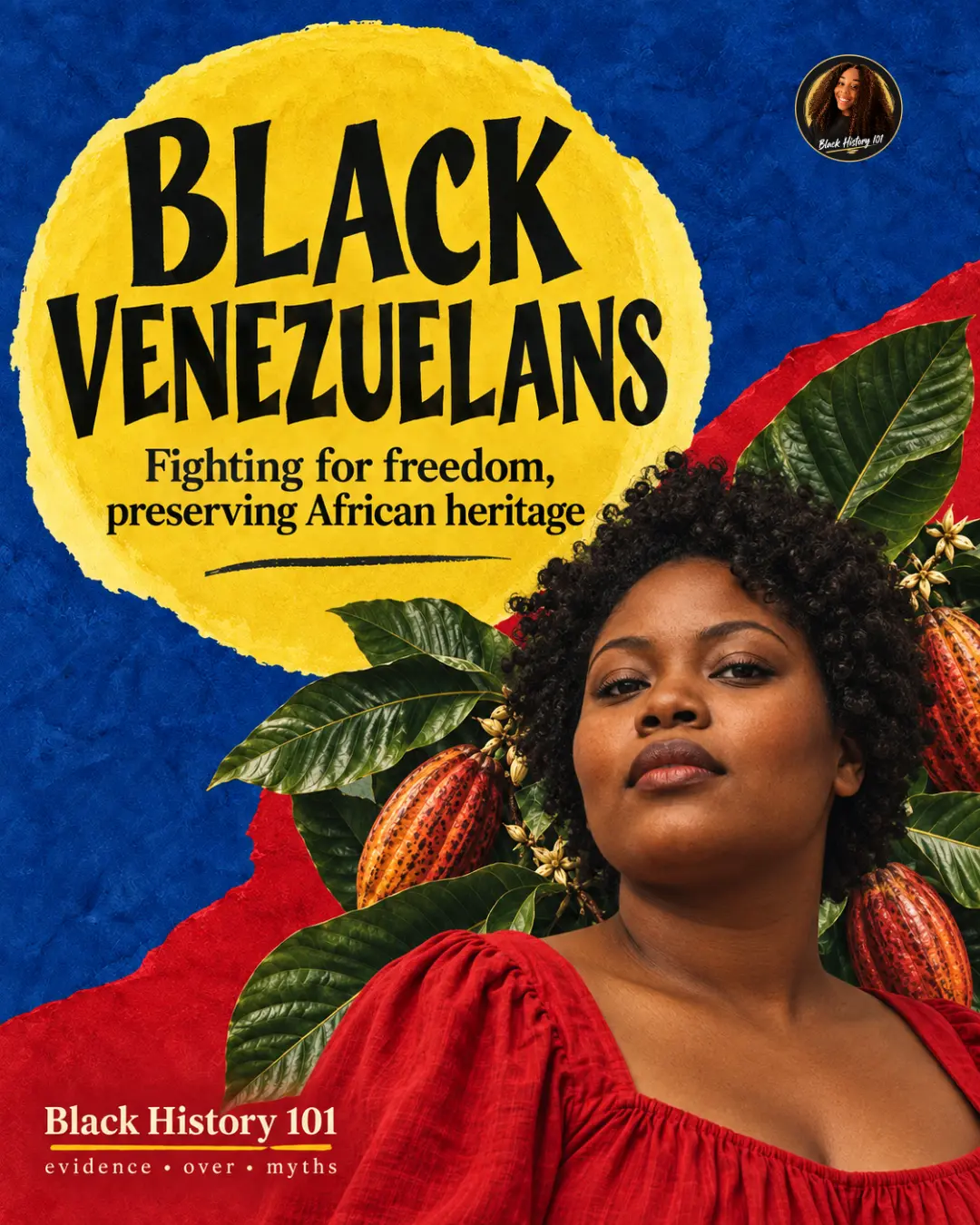
Black Venezuelans
Fighting for freedom, preserving African heritage
From the early 1500s, enslaved Africans in Venezuela worked in mining and agriculture, escaped to build their own communities, rose up at Coro in 1795, and sustained African traditions that their descendants continue to defend.
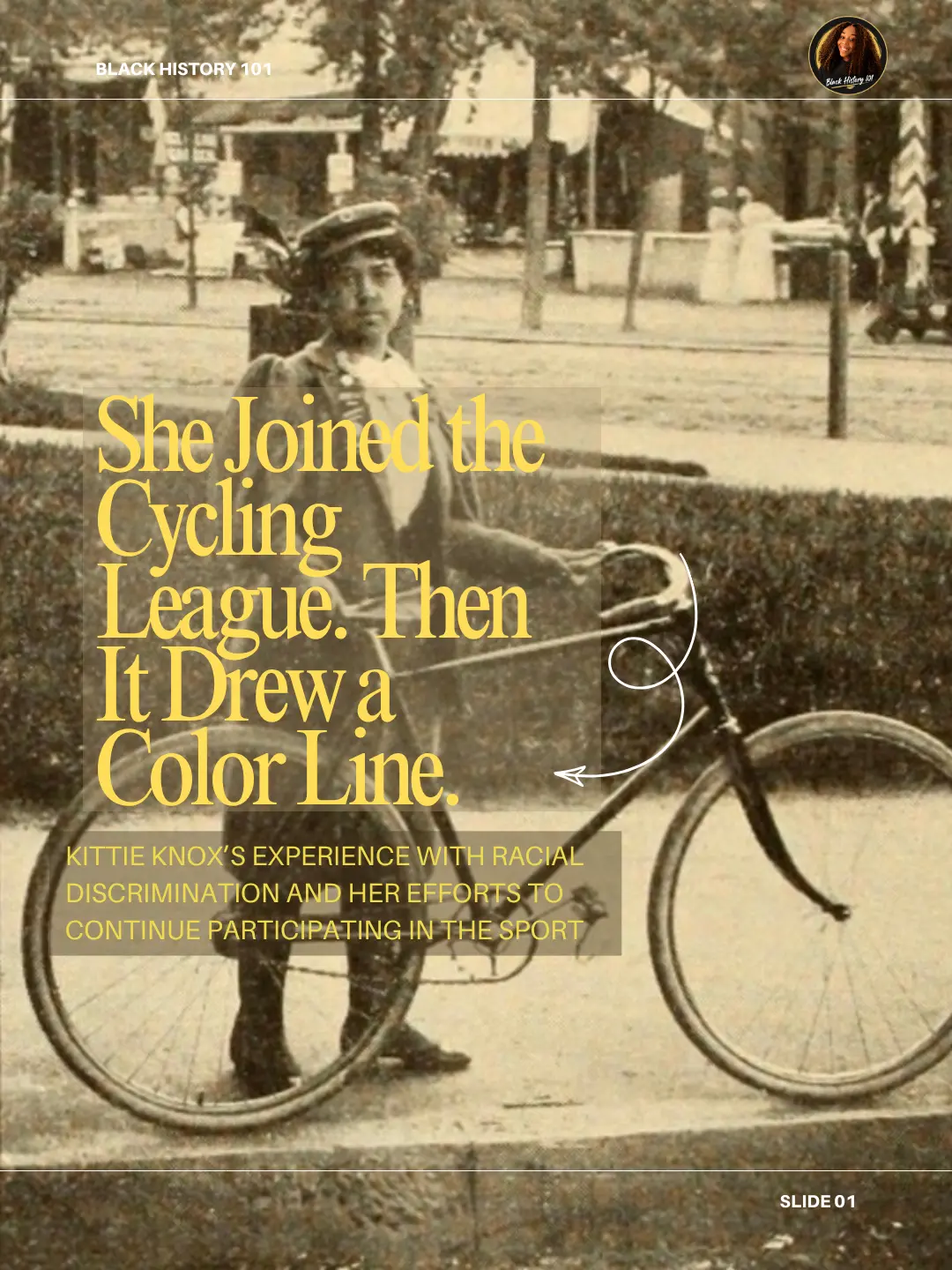
She Joined the Cycling League. Then It Drew a Color Line.
Kittie Knox's experience with racial discrimination and her efforts to continue participating in the sport.
Kittie Knox joined the League of American Wheelmen in 1893. When the league restricted new membership to white people the next year, her eligibility was questioned, and she kept presenting her credentials and riding.
Join The 101
The story doesn't end here.
Join The 101 and get the monthly Black History 101 letter—a story worth knowing, the context behind it, and what to read or watch next.
Free to join. Receive the monthly Black History 101 letter plus occasional updates about new resources, courses, and programs. Unsubscribe anytime.
Keep Learning
Classroom-ready Black history resources, courses and teaching materials.
Explore Educator ResourcesFor FamiliesResources for parents and caregivers who want to explore Black history at home.
Learn TogetherFor Curious MindsVisual essays, courses and resources for independent learners who want to go deeper.
Start Exploring